
Closure is a test result, not a ticket state
A pull request has been merged. The new unit test passes. The finding moves to resolved. None of those events proves that the deployed system now rejects the attack.
We see security fixes fail in ordinary ways. Authorization is added to one route while a sibling endpoint still reaches the same operation. Input validation is placed in the browser while the API continues to trust the request. A vulnerable package is upgraded in the repository but the old image remains in production. The patch can be reasonable and the exposure can still exist.
Security fix validation starts from a stricter question: under the conditions that produced the original finding, can the vulnerable outcome still be reached? The answer has to come from the running control, not from the intent of the change.
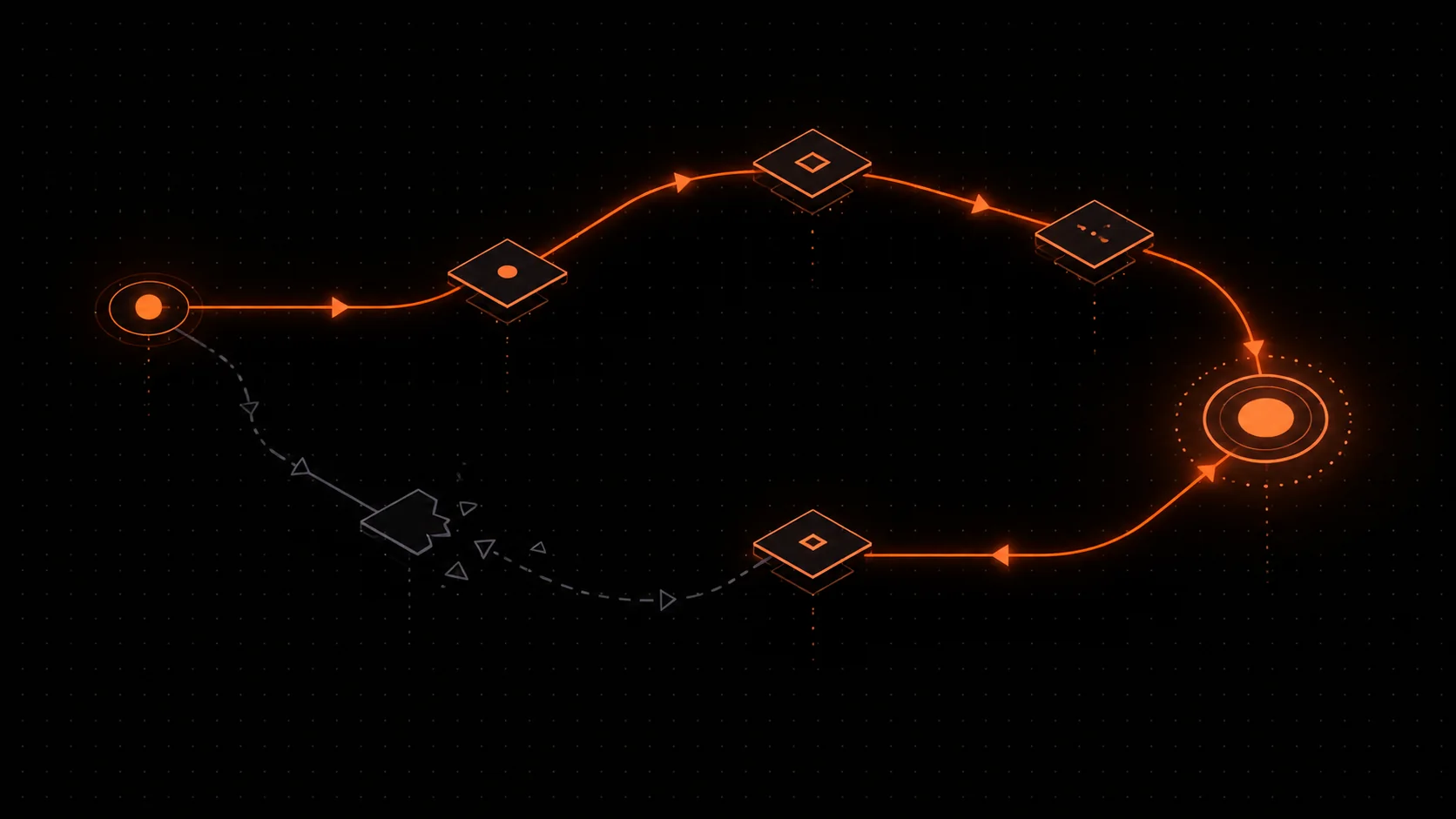
Write the validation contract before sending traffic
A retest should have a small, explicit contract. Without one, it is easy to change several variables at once and produce a result that nobody can interpret.
Record the target and deployment, the identity or privilege level in use, the necessary application state, the exact action that demonstrated the issue, and the observable result that constituted impact. Then define the expected fixed behavior. For an authorization flaw, that might be a denied operation with no state change. For injection, it might be inert handling of the original payload and no secondary effect. For exposed data, it might be the absence of the protected fields, not merely a different HTTP status.
The contract must also preserve the safety limits of the original assessment. A fix validation is not permission to widen scope, use more destructive payloads, or test adjacent systems.
Preserve the exploit path as evidence
The original proof should be treated as a test fixture. Keep the request sequence, relevant headers, identities, resource identifiers, timing assumptions, and evidence of the vulnerable outcome. If source context was used, retain the code location and data flow that explained why the behavior occurred.
This matters because a vulnerability often depends on state. Replaying only the last request from a multi-step account takeover can produce a false negative. So can using a privileged session where the original test used a low-privilege account, or validating against a staging environment whose controls differ from production.
Good evidence lets another authorized tester reconstruct the attack without guessing. If the finding cannot support that, improve the evidence before treating the retest as authoritative.
Replay narrowly, then challenge the control boundary
Start with the closest safe reproduction of the original exploit. Keep the target, attacker position, identity, and sequence stable. The first result should tell you whether the demonstrated path was closed.
Once that path is blocked, inspect the control that was supposed to stop it. A narrow amount of variation is justified when it tests the same security boundary:
- For broken access control, repeat the operation with the relevant lower-privilege roles and object ownership states.
- For server-side request forgery, verify that enforcement covers redirects, alternate address forms, and the final resolved destination where those behaviors were part of the finding.
- For injection, check the same source-to-sink path through equivalent encodings or content types accepted by that endpoint.
- For workflow abuse, confirm the rule is enforced by the service that owns the state change, not only by the user interface.
This is not a new penetration test. It is a focused check that the remediation protects the boundary rather than matching a single payload. If the required exploration grows beyond the original control or asset, stop and scope a separate assessment.
Use three outcomes, and make each one defensible
Binary ticket states encourage overconfidence. A retest needs room for uncertainty.
| Outcome | Evidence required |
|---|---|
| Confirmed fixed | The original exploit and relevant boundary checks no longer produce the vulnerable effect in the intended deployment. The observed secure behavior is recorded. |
| Still vulnerable | The original path, or a materially equivalent path through the same control failure, still produces impact. Reproduction evidence is attached. |
| Inconclusive | A changed prerequisite, unavailable environment, safety limit, or unstable result prevents a reliable conclusion. The blocking condition is recorded. |
Inconclusive is a valid engineering result. It means the team still has work to do before closure; it does not mean the vulnerability is fixed or still exploitable.
Separate regression coverage from exploit validation
The best remediations usually create more than one kind of evidence. Code review explains why the change should work. Unit and integration tests protect the intended invariant during future development. A targeted exploit retest shows whether the deployed application now enforces that invariant against the attack that mattered.
These layers catch different failures. A unit test may never encounter the reverse proxy rule, serializer behavior, deployed identity policy, or stale service that made exploitation possible. Conversely, a one-time retest will not prevent a future refactor from reintroducing the bug. Treat the exploit as input to lasting regression coverage where it can be represented safely, but do not confuse that coverage with validation of the running system.
Build a closure record another engineer can audit
A useful record is short enough to read and complete enough to challenge. It identifies the finding and affected asset, deployment or version tested, authorization context, steps replayed, observed behavior, variations attempted, result, and tester. It also links the remediation change and preserves non-sensitive evidence such as redacted requests, responses, screenshots, or trace output.
Avoid closure notes such as "cannot reproduce" without context. That phrase can mean the fix worked, the session expired, the test data changed, the endpoint moved, or the tester followed the wrong sequence. A closure decision should survive handoff to someone who was not present during remediation.
How Vulnix keeps the finding and retest connected
Vulnix is built around an evidence chain rather than a disconnected alert and ticket. An authorized run records the affected asset, exploit evidence, agent trace, and finding context. That record gives a targeted validation attempt the information needed to exercise the original path after remediation and report what happened.
Keeping the retest tied to the finding is important. It reduces interpretation drift, makes an inconclusive result visible, and gives engineering and security the same record for review. The goal is simple: a finding is closed because the attack was disproved under known conditions, not because enough time passed after a patch.
The supporting workflow is documented in findings and reports and security and trust.
A field protocol for security fix validation
- Confirm written authorization, the target asset, and the allowed test window.
- Pin the deployment or version that contains the remediation.
- Reconstruct the original identity, state, request sequence, and vulnerable outcome from preserved evidence.
- Replay the original exploit with the same safety controls.
- Verify the expected secure behavior and check only the nearby variants that exercise the same control boundary.
- Record the result as confirmed fixed, still vulnerable, or inconclusive, with evidence and limitations.
- Add or update regression coverage, then close the finding only when the record supports closure.
A security patch is an implementation claim. Validation is the evidence that decides whether that claim holds in the system attackers can reach.